
GS Governance · Attorneys at Law | Notary

Establishing a business in Switzerland

Your Swiss company: formed, operational, in responsible hands.

We take overall responsibility for your market entry, from choosing the legal form to the first hire, including the person who answers for it in the commercial register.

Not at the formation. That is done in a few weeks.

But here:

The person in the commercial register.

Art. 718(4) of the Swiss Code of Obligations (CO) requires an authorised signatory resident in Switzerland. This person is personally liable (Art. 754 CO) and liable for social security contributions (Art. 52 AHVG), even if the decisions are taken 600 kilometres away.
The bank.

Not every institution will open a capital deposit account for foreign beneficial owners. The review takes longer than planned. Whoever notarises first ends up waiting.

The permits.

EU and EFTA nationals pose no problem. For third-country nationals, quotas apply, both the canton and the federal authorities are involved, and permits are granted only to those who count as qualified specialists. This takes months.

The structure.

Off-the-shelf articles of association, no allocation of competences, signing authorities that nobody can keep track of after two changes of staff.

One contact person and one timetable.

We do part of the work ourselves, assign part to partners we have worked with for years, and take responsibility for the whole.

In-house

  • Legal form, articles of association, allocation of competences, signing authorities
  • Shareholders' agreement, employment contracts under Swiss law
  • Notarisation of the formation in our own notary office, valid throughout Switzerland, for every canton
  • Commercial register office, VAT registration with the Swiss Federal Tax Administration (ESTV), dealings with the migration office

Through our network

  • Tax advice and rulings
  • Accounting and fiduciary services (Treuhand), payroll administration
  • Bank onboarding
  • Site search and recruitment

These partners have not been put together at random; they are people with whom we have completed mandates. On request, we introduce them to you before you engage them.

The board of directors mandate

We take on the role.

Then fully: with access to the figures, agreed reporting lines to the parent company and the ability to reject a resolution.

You provide the person, we support them.

Onboarding, ongoing advice, liability questions.

What we do not offer: a name in the register that does nothing else. That works until something happens.

The company is handed over when …

  • the commercial register entry is legally effective
  • the business account is open and the capital has been released
  • the VAT number has been issued
  • registration with the compensation office (Ausgleichskasse), the occupational pension scheme and accident insurance is complete
  • an authorised signatory resident in Switzerland has been entered in the register
  • the first hires are contractually settled and approved
  • the articles of association, allocation of competences and reporting lines are set down in writing
  • you have handover documentation: who is responsible for what, and which deadlines are running

Not included in the flat fee: sector-specific permits, tax rulings, real estate acquisition, fees charged by authorities, banks and insurers. We identify these items in the first meeting and quote for them separately.

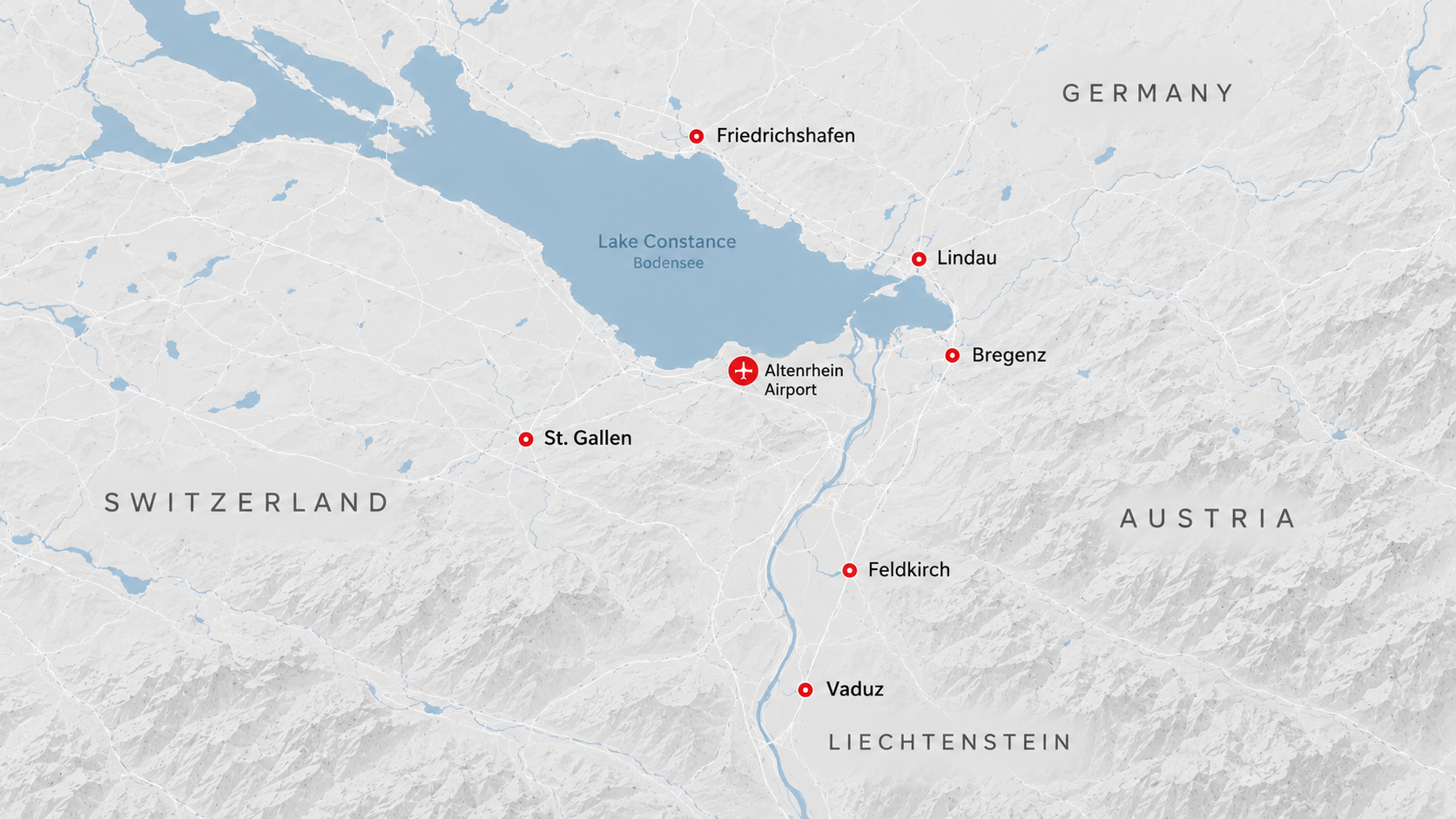
Our office is where four countries meet.

  • Austrian border: a few minutes
  • Liechtenstein and German border: just over 20 minutes
  • Altenrhein Airport: 5 minutes

A large share of our mandates come from Vorarlberg, southern Germany and the Principality of Liechtenstein. For many of these companies, Eastern Switzerland is also the right location: moderate tax burden, accessible authorities, shorter distances than in Zurich or Zug. But it is not a must. The registered office follows your business, not our address. Companies can be formed in any canton.

Duration: 8 to 10 weeks from decision to handover, where no permits are required.

Most of this time is taken up by the commercial register, the bank and social insurance. If your sector requires a permit, or third-country nationals are joining the team, the timetable depends on that. We tell you what is realistic in the first meeting, before you communicate a date within your group.

Who leads this

Dominic Görg

Business attorney and two-time entrepreneur. State financial market supervisory authority of Liechtenstein, top management of a financial institution, executive board and board of directors of several companies.

He has himself held the corporate office that we take on for you. From his time at the supervisory authority, he knows how an authority reads a company from the outside. His focus is risk management. Applied to a company formation, this means: do not build a structure that falls apart at the first incident.

In brief.

Does a Swiss company need a person resident in Switzerland?
Yes, under Art. 718(4) CO. The firm takes on this role or supports the person the company provides itself.
How long does it take to form a company in Switzerland?
8 to 10 weeks if no permits are required.
What is not included in the flat fee?
Sector-specific permits, tax rulings, real estate acquisition and third-party fees.

What it costs.

Initial consultation

Free of charge.

Recommendation

On legal form, canton, tax situation, permit requirements and timeframe, in writing. Fixed price, credited when the mandate is awarded.

Formation and start of operations

Flat fee for the end state described, third-party costs shown separately.

After the handover

Retainer with a defined allowance, or an individual mandate.

Board of directors mandate

Annual fee, billed separately.